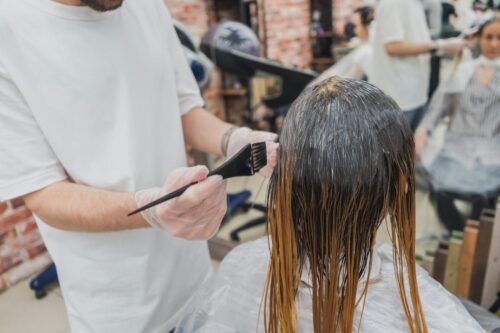
Questioning the “Common Assumption” That Gray Hair Should Be Colored
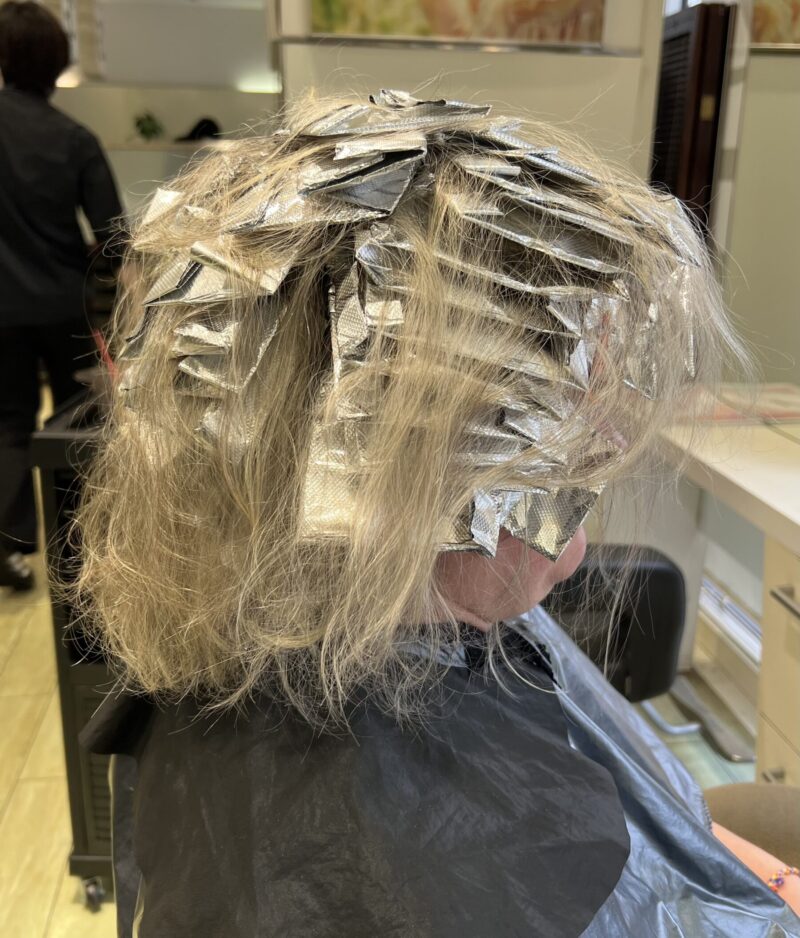
“Lately, I’ve started to notice my gray hair…”
This is something I hear almost every single day.
Regardless of age or gender, gray hair and thinning hair are often perceived as the first visible signs of aging for many people.
And in most cases, the next step people take is almost always the same.
“So, I guess I should dye it, right?”
Yes, that’s a completely natural choice.
Hair coloring and gray coverage are the most obvious and immediate solutions.
But after seeing the hair and scalps of over ten thousand people,
and observing hair types, skin types, and scalp conditions from all over the world,
there has always been one discomforting question that stayed with me.
That question is—
Is “noticing gray hair and immediately coloring it” really the best solution?
⸻
Gray Hair Is Not a “Hair Problem,” but a “Scalp Condition”
Gray hair is often explained away as:
“It’s because of age,” “It’s genetic,” or “There’s nothing you can do about it.”
But in reality, it can be broken down a little more clearly.
The major factors related to gray hair are mainly these three:
• Blood circulation in the scalp
• The function of cells that produce melanin pigment
• Inflammation and dryness of the scalp
In other words,
gray hair is not a hair issue—it is an issue of the scalp, which is part of the skin.
Poor circulation,
dry scalp,
and chronic inflammation.
Under these conditions, melanin cannot be produced properly.
On the other hand, when:
• Blood flow is sufficient
• The scalp is well moisturized
• There is no redness or irritation—zero inflammation
Under these conditions,
there are medically reported cases where gray hair decreases or gradually returns closer to its original color.
⸻
Why Most People Don’t Choose “Root-Cause Care”
So why doesn’t everyone take this approach?
The answer is simple.
Because it takes time.
Because it’s subtle.
Because the results aren’t immediate.
This isn’t just about gray hair.
It applies to work, studying, health—life itself.
Even when people know consistent effort leads to change,
they are naturally drawn to solutions that work right now.
Hair coloring is a perfect example.
• Dye it today, look better today
• Pay money, get immediate results
• Easy for anyone to understand
That’s why people choose it.
And that choice itself isn’t wrong.
⸻
What Actually Happens When You Keep Coloring
This is the part I want to be honest about as a professional.
Most hair dyes used for gray coverage contain hydrogen peroxide.
This hydrogen peroxide:
• Comes into contact with the scalp
• Remains on the skin
• Creates chronic oxidative stress
When this continues,
gray hair doesn’t decrease—it often increases.
In other words:
Actions taken to temporarily hide gray hair
can actually lead to more gray hair in the long run.
I have seen this contradiction many times.
⸻
This Is Not an Extreme “Don’t Dye Your Hair” Argument
I don’t want this to be misunderstood.
Coloring hair is not “bad.”
Feeling reluctant to go out in public because of gray hair,
feeling emotionally down,
experiencing a decline in quality of life (QOL).
These are real stresses.
That’s why I recommend:
• Avoid applying dye directly to the scalp
• Use highlights and lowlights to blend gray hair
• Avoid unnecessary frequency
This kind of “scalp-protective coloring” is something I actively support.
⸻
The Most Important Perspective: “Not Increasing”
To be honest,
“reducing gray hair” or “fully restoring original color”
is not easy.
But:
• Not increasing it
• Not making it worse
• Maintaining the future condition
These are realistically achievable.
This way of thinking is the same as preventive medicine.
Instead of treating illness after it appears,
you prepare so it doesn’t happen in the first place.
Beauty also has preventive care.
⸻
Preventive Beauty Is Surprisingly Simple
What I suggest is not complicated.
• It can be done in the bath
• It takes less than five minutes a day
• No special techniques are required
The key points are:
• Don’t dry out the scalp
• Don’t cause inflammation
• Create an environment where blood circulates well
That’s why care based on plant extracts,
and the idea of “moisturizing” rather than simply “washing” the scalp,
becomes so important.
Those who continue and those who don’t—
that alone creates a significant difference over the years.
⸻
Looking Beyond Trends to Long-Term Beauty
Gray blending
Highlights
Hair texture treatments
The latest techniques
Of course, technique matters.
It’s something hairstylists should study.
But technique alone cannot solve the root problem.
What matters most to me is:
How to protect and design a person’s hair and scalp
ten or twenty years from now
Not short-term sales,
but long-term trust and results.
A hairstylist is not simply someone who dyes hair
or creates trends.
I believe our role is to provide a framework for judgment and knowledge.
⸻
If you’re currently concerned about gray hair,
this might be the best time to start preventive care.
Coloring is one option.
But it doesn’t have to be the only one.
I hope we can think together about how to find that balance.