Thoughts from a Hair Specialist, Inspired by the Latest Dermatological Science
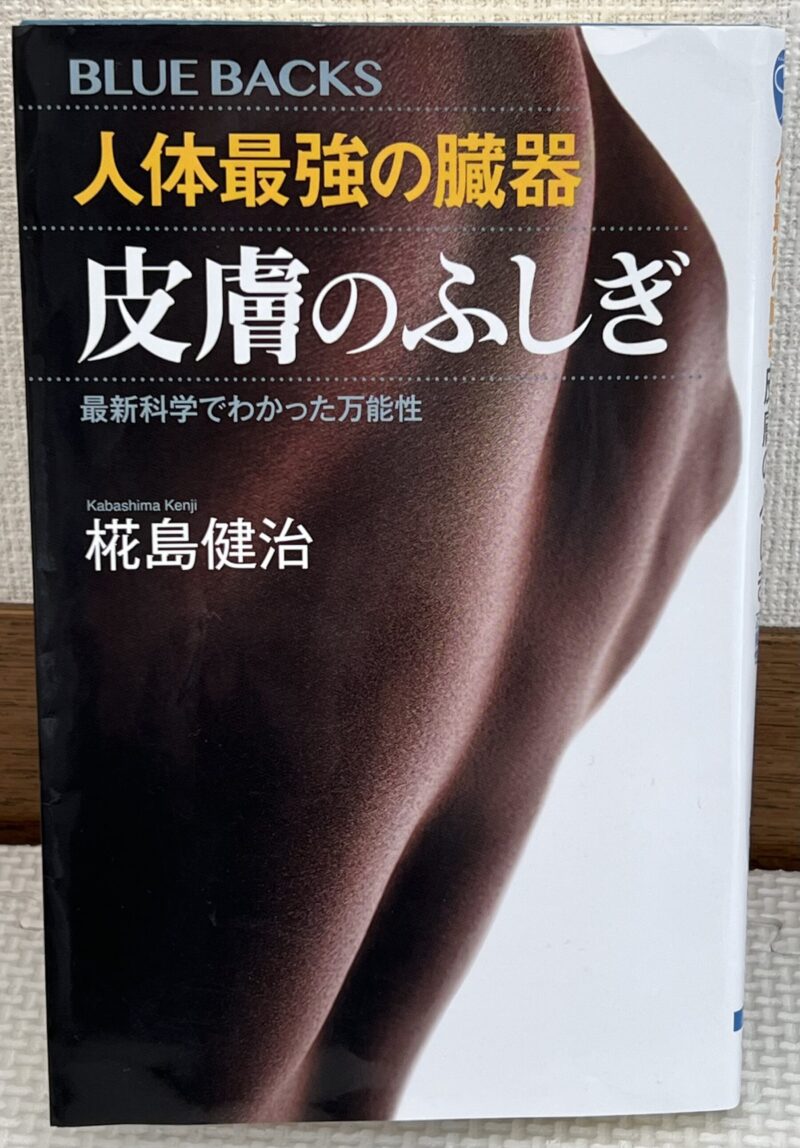
Recently, I read a book.
The Skin: The Strongest Organ in the Human Body.
The author is a physician specializing in dermatology at Kyoto University Graduate School,
and a leading expert who has spent many years researching atopic dermatitis.
To be honest, this book was fascinating.
Because what it describes aligns almost perfectly with what I have long felt
through years of working in the beauty industry,
as well as with the conclusions of modern dermatological science.
Why Has Dermatological Medicine Lagged Behind?
There was one point in the book that left a strong impression on me.
Compared to other medical specialties,
dermatological diseases are often considered
“less directly life-threatening.”
Fatal conditions are largely limited to skin cancers and certain infections.
As a result,
- Atopic dermatitis
- Chronic itching
- Dry skin
- Skin irritation
—issues that are everyday yet deeply troubling—
were long given lower priority in medical research.
But if we think about it,
these conditions clearly have a major impact on quality of life.
In Japan, the economic burden of adult atopic dermatitis—
including not only medical expenses but also self-care costs
and productivity losses such as reduced work performance—
is estimated to reach around 3 trillion yen annually.
Seen this way,
skin problems are clearly not just “someone else’s issue.”
Hair Is Part of the Skin
Here, there is something I want to state clearly as a hairstylist.
Hair is part of the skin.
In traditional Eastern medicine, hair is described as ketsuyo (血余),
meaning it is strongly influenced by the body’s condition and nutritional state.
In other words,
the condition of the scalp equals the condition of the hair.
Ignoring this premise and trying to treat hair alone
is fundamentally unrealistic.
The Simple Conclusion Reached by Modern Dermatology
There was one conclusion in this book that made me think,
“Exactly—that’s it.”
It is this:
No matter how advanced medical treatments become,
what ultimately matters most is
“moisturization” and “protection from UV radiation.”
That is the conclusion.
Not expensive treatments,
not cosmetic medicine,
not AGA therapies,
and not even insured medical care.
Daily moisturization and protecting the skin from UV exposure.
That is the most reliable path to protecting the skin.
What I’ve Learned from Seeing Tens of Thousands of Heads of Hair
To be honest, I felt this long before reading the book.
After seeing the
・scalp
・hair
・skin
of tens of thousands of clients, I’ve come to realize this:
The root of most problems lies in everyday habits.
And those habits are usually
・not difficult
・not expensive
・something anyone can do
They are simply “ordinary.”
But when those ordinary things are neglected,
symptoms eventually surface.
Dryness Is Actually More Problematic Than UV Exposure
Protecting the scalp from UV rays is actually quite simple.
Hair itself offers some protection,
and wearing a hat is usually enough.
Even sun exposure for vitamin D purposes
is generally fine at around 30 minutes per day.
Moisturization, however, is more problematic.
When the skin becomes dry,
・inflammation is more likely to occur
・the skin becomes more sensitive
・allergic reactions become more likely
As a result,
- Hair coloring or perm solutions may sting
- Hair may become thinner or more fragile
- Gray hair may appear more easily
These issues begin to emerge.
Aren’t These Things Treated as “Normal” in Salons?
Let me ask you something.
- Are chemical products routinely applied directly to the scalp?
- Is undiluted shampoo rubbed in vigorously?
- Is the scalp rinsed with strong water pressure?
The thickness of the skin is roughly that of a single layer of plastic wrap.
This is not an exaggeration—it’s literally that thin.
Scrubbing aggressively can easily destroy the skin barrier.
And once that happens, dryness, inflammation, and skin trouble begin.
Why Fundamentals Matter in an Age of Information Overload
Today,
on social media and the internet,
claims like “This alone will cure it” or
“Use this and your hair will grow”
are everywhere.
But much of it is driven by business-focused marketing.
Money gets spent on unnecessary things,
while what truly matters is left behind.
That’s why I believe hairstylists need the knowledge
to identify what is truly essential.
What I Value Most
Nothing special is required.
What matters is:
- Preventing dryness
- Preventing inflammation
Just these two things.
Moisturization means maintaining the proper balance of
“water” and “oil”
to preserve the skin’s barrier function.
The reason I recommend Herb Magic is not for temporary results,
but to help create a moisturizing routine
that can be sustained at home.
Results achieved only in the salon are meaningless.
If daily habits don’t change, neither skin nor hair will truly change.
In Closing
Your skin,
as thin as a single layer of plastic wrap,
protects you every single day.
That’s why,
rather than doing excessive things,
it’s better to choose what is simple and sustainable.
I intend to keep sharing these
“ordinary yet most important truths”
carefully and honestly in my salon work.
If you ever feel unsure about what to believe,
take a moment to pause
and re-examine your scalp and hair
through the lens of moisturization and inflammation.
The answer is surprisingly simple.