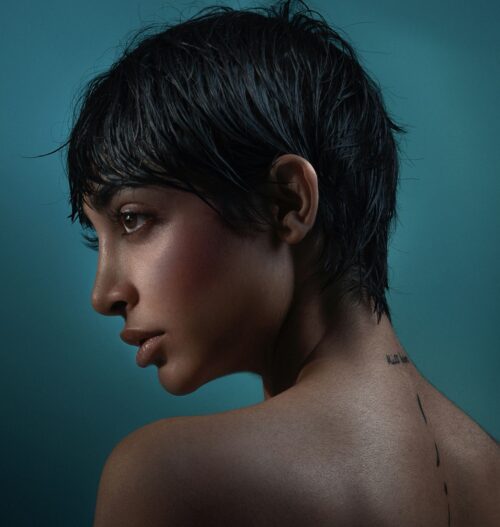
Haircuts that soften gray hair. A way to make it less noticeable without hair color.
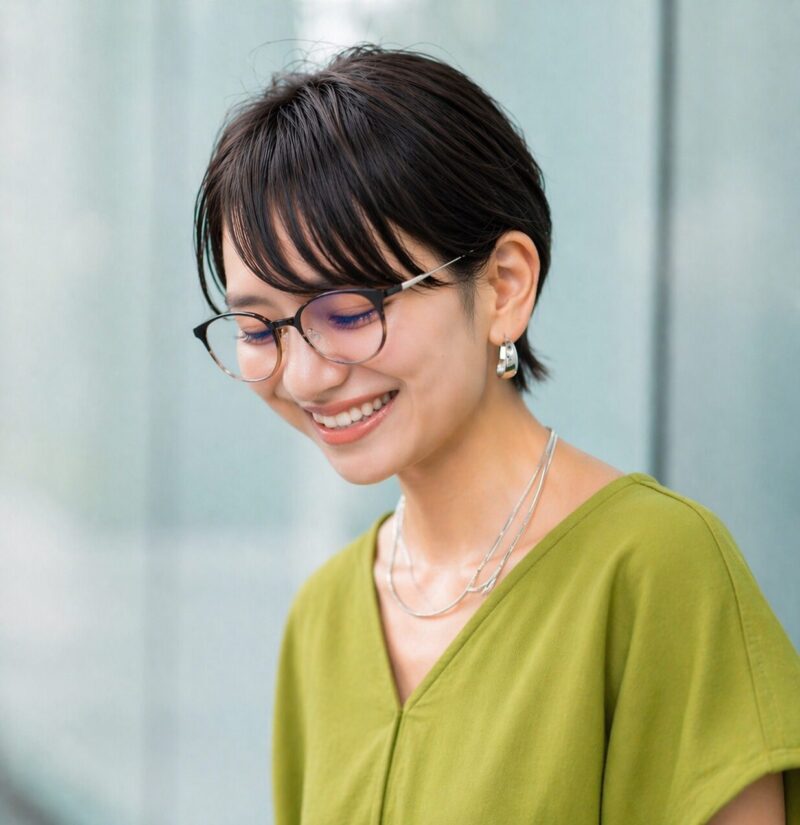
When gray hair starts to become noticeable, the first thing most people think about is hair color.
However, as long as chemicals are used, the burden on the scalp and hair is not zero.
The longer you continue, the more it can lead to dryness, damage, and changes in the scalp environment.
So this time, without relying on color,
I will explain the idea of making gray hair less noticeable using only a haircut.
The reason gray hair stands out is the “shape”
Whether gray hair stands out or not is determined more by how it looks than by the number of strands.
It becomes especially noticeable when:
- It appears on the surface
- There is no movement
- All the hair is the same length
This kind of condition.
For example, like a one-length bob,
when all the hair is the same length, the surface becomes flat.
Then, even a single gray hair
can reflect light and stand out.
On the other hand,
- Create differences in length (layers)
- Add movement
- Create dimension
By focusing on these three points, gray hair becomes much less noticeable.
When the hair has movement,
different lengths mix visually,
so gray hair blends in like natural highlights.
The number stays the same, but the appearance changes.
Key points of a haircut that softens gray hair
The points I focus on in practice are simple.
- Avoid creating a clear parting
- Add movement to the surface
- Create a flow that naturally covers areas of concern
① First, the parting.
If you create a clear center or side part,
gray hair along that line becomes concentrated and more visible.
Also, if UV rays continue to hit the same part,
it can lead to dryness, inflammation, increased oxidative stress, and cellular damage,
which may accelerate aging, gray hair, and thinning.
So instead of fixing the part,
create a design that works no matter which side the hair flows.
This helps reduce stress on the same area of the scalp.
Or,
create bangs so that a part doesn’t form.
The most effective approach is
to have bangs and eliminate a fixed part.
② Next, the face area.
Gray hair tends to appear more often around
the hairline, temples, and sideburns.
For the hairline around the face,
instead of flowing everything backward,
a natural forward flow works better.
However,
a style that overly covers the face
can create a heavy impression,
so balance is important.
Even a slight overlap of hair at the hairline
can soften the overall look.
The same applies to the temples and sideburns,
and shaving can also be an option.
Not only a two-block style,
but trimming just the sideburns can work well.
Two-block styles may feel more masculine,
but softer versions can be easily adapted for women as well.
By adjusting the shaved length from 0–30mm
according to hair type,
it becomes easier to personalize the look.
③ Lastly, the top.
The top of the head easily catches light,
making gray hair more noticeable.
By adding lightness and movement here,
attention is dispersed and not focused only on gray hair.
Using layering techniques,
creating slightly shorter hair at the top can help.
Even without coloring, the way it looks can change.
It’s not an instant solution,
but a way to naturally improve while reducing stress on the scalp.
Instead of “hiding” gray hair,
thinking in terms of “blending” is also one approach.