
Why Short Hair Reveals a Hairdresser’s Skill More Clearly
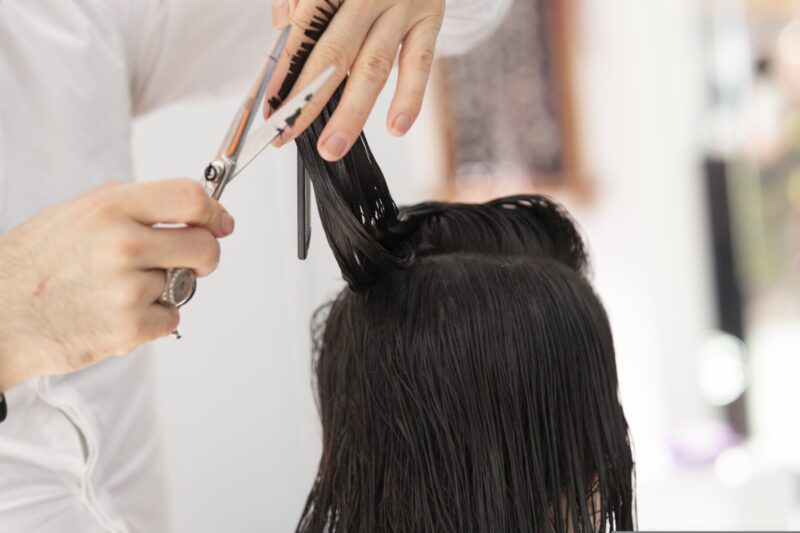
“I’m looking for a hairdresser who is good at cutting short hair.”
This is something I hear very often from first-time clients.
Of course, long hair and bob haircuts are also technically challenging. There is no such thing as an easy haircut.
However, among all hairstyles, there is one that tends to reveal the difference in technical skill more clearly.
That hairstyle is short hair.
So why is short hair so difficult?
A 1 cm Difference Can Make a Big Impact
Because short hair is shorter in length, even a small difference can have a major effect on the final result.
Bangs are a simple example.
If bangs are cut just 1 cm shorter than intended, a client may feel:
“This isn’t what I expected.”
“I look younger than I wanted.”
“I don’t think this suits me.”
These reactions are quite common.
With long hair, on the other hand, cutting 1 cm off the ends often creates very little visible change, and many people may not even notice it.
In other words, the shorter the hair, the more precision is required.
With very short hairstyles or fades, even a few millimeters can change the overall impression.
That is why short hair tends to reflect a hairdresser’s technical skill more clearly than longer hairstyles.
Short Hair Reveals Natural Head Shape and Hair Texture
There is another reason why short hair is more challenging.
It reveals a person’s natural head shape and hair texture much more clearly.
Everyone’s head shape is different.
Some people have a rounded back of the head, while others have a flatter shape.
Some have wider sides, while others naturally appear to have a smaller head shape.
With long hair, the length and weight of the hair often soften or hide these characteristics.
With short hair, however, the head shape becomes part of the design itself.
For example, if someone has a flat back of the head, simply cutting the hair short will not automatically create a rounded silhouette.
Where should length be left?
Where should weight be removed?
Where should volume be created?
Where should the shape be tightened?
A hairdresser must consider all of these factors while designing the haircut.
The same applies to hair texture.
Curly, wavy, or textured hair can often appear calmer when it is longer because the weight of the hair pulls it down.
When the hair becomes shorter, that weight disappears, allowing the natural texture to become much more noticeable.
Short hair requires an understanding of both the client’s head shape and their natural hair texture.
Short hair is not simply about cutting hair shorter.
Head shape.
Hair texture.
Growth patterns.
Hair density.
All of these elements must be considered when creating the final design.
That is why short hair often highlights the difference between hairdressers more than any other hairstyle.
If you are thinking about getting short hair, it may be helpful to look beyond trend photos and ask yourself:
“Can this hairdresser adapt the style to my head shape and hair texture?”
Choosing a hairdresser from that perspective can make a significant difference.
The short hairstyle that suits you best is not necessarily the one that looks good on someone else. It is the one designed specifically for your head shape, hair texture, and individuality.